Almost every cyclist who plateaus does so for the same reason: they ride more miles and push harder on every ride, then wonder why their average speed barely moves. Getting faster is rarely a matter of effort; it is a matter of structure. The guide that follows draws on the same principles used by professional coaches and exercise physiologists, and it applies just as well to a club rider with eight hours a week as it does to a national-level racer.
What actually makes you faster
Speed on a bike is the product of three distinct qualities: the power you can produce, the efficiency with which that power moves you forward, and the endurance that lets you sustain power over time. Most cyclists train only the third quality, because long rides feel productive and require no special planning. The other two qualities, ignored for years, are exactly where the missing speed lives.
The biggest mistake: riding the same pace every time
The most common error in self-coached cycling is riding every session at a vague “medium-hard” effort — too intense to build a real aerobic base, too easy to build top-end power. The body adapts to neither stimulus particularly well, and progress stalls inside what coaches call the dead zone of training.
The fix is polarised training: roughly eighty percent of your rides at a genuinely easy, conversational pace (Zone 2), roughly twenty percent at clearly hard efforts (Zone 4 to 5), and almost nothing in between. Easy rides build aerobic capacity without leaving you cooked the next day, hard rides build the power and speed you actually want, and recovery becomes possible because you are not constantly grinding through the middle. A simple four-ride week might look like an easy hour on Monday, an interval session of five-by-five-minutes at threshold on Wednesday, an easy forty-five minutes on Friday, and a long easy ride of ninety minutes to two hours on Saturday. Three easy rides, one hard ride, nothing in between.
Build the aerobic engine first
Speed requires a large aerobic base, and most cyclists try to skip this step because Zone 2 work feels boring and unproductive. The physiological case for it is overwhelming: easy aerobic riding increases mitochondrial density inside your muscle fibres, improves your ability to burn fat as fuel, expands the capillary networks that deliver oxygen, and supports the high training volumes that produce real adaptation. The result is a rider who can hold higher efforts for longer and recover faster between them.
Zone 2 is harder to execute than it sounds. The target sits around sixty to seventy percent of maximum heart rate, low enough that you can hold a complete conversation in full sentences. The most common mistake is riding too hard, because the pace genuinely feels too easy to be useful. Six to ten hours per week of this kind of riding, sustained for eight to twelve weeks before any intensity is added, is the foundation that everything else is built on. Professional cyclists spend roughly four-fifths of their training year here. It is not optional.
Build power with intervals
Once a base is in place, intervals are what turn endurance into speed. Three types do most of the work. VO2 max intervals — three to five minute efforts at one hundred and ten to one hundred and twenty percent of FTP, typically five-by-four-minutes with four minutes recovery — push up the ceiling of your maximum oxygen uptake and should be used once a week in the eight to twelve weeks before a goal event. Threshold intervals of eight to twenty minutes at ninety-five to one hundred and five percent of FTP, often programmed as two-by-twenty-minutes at FTP with ten minutes recovery, raise the power you can hold for around an hour and remain useful year-round. Sprint intervals of ten to thirty seconds all-out, with two to three minutes of easy spinning between each, develop neuromuscular power and peak wattage and reward consistent inclusion through the year.
The discipline that separates effective interval training from junk training is simple: more is not better, better is better. The aim is quality at the target power, not quantity at a slowly declining one. If your power drops more than about ten percent across the set, the remaining intervals are doing more harm than good and you should stop the session. Five intervals all hit at the prescribed power are a meaningfully better stimulus than eight intervals where the last three are mush.
Find the free speed
You can get faster without getting stronger, simply by wasting less of the power you already produce. The first lever is pedalling technique. Mashing big gears at a low cadence creates uneven power delivery and burns energy that never reaches the road. A target cadence of eighty-five to ninety-five revolutions per minute, trained with one-leg drills and short high-cadence intervals at one hundred or more, smooths the stroke and converts more of your effort into forward motion.
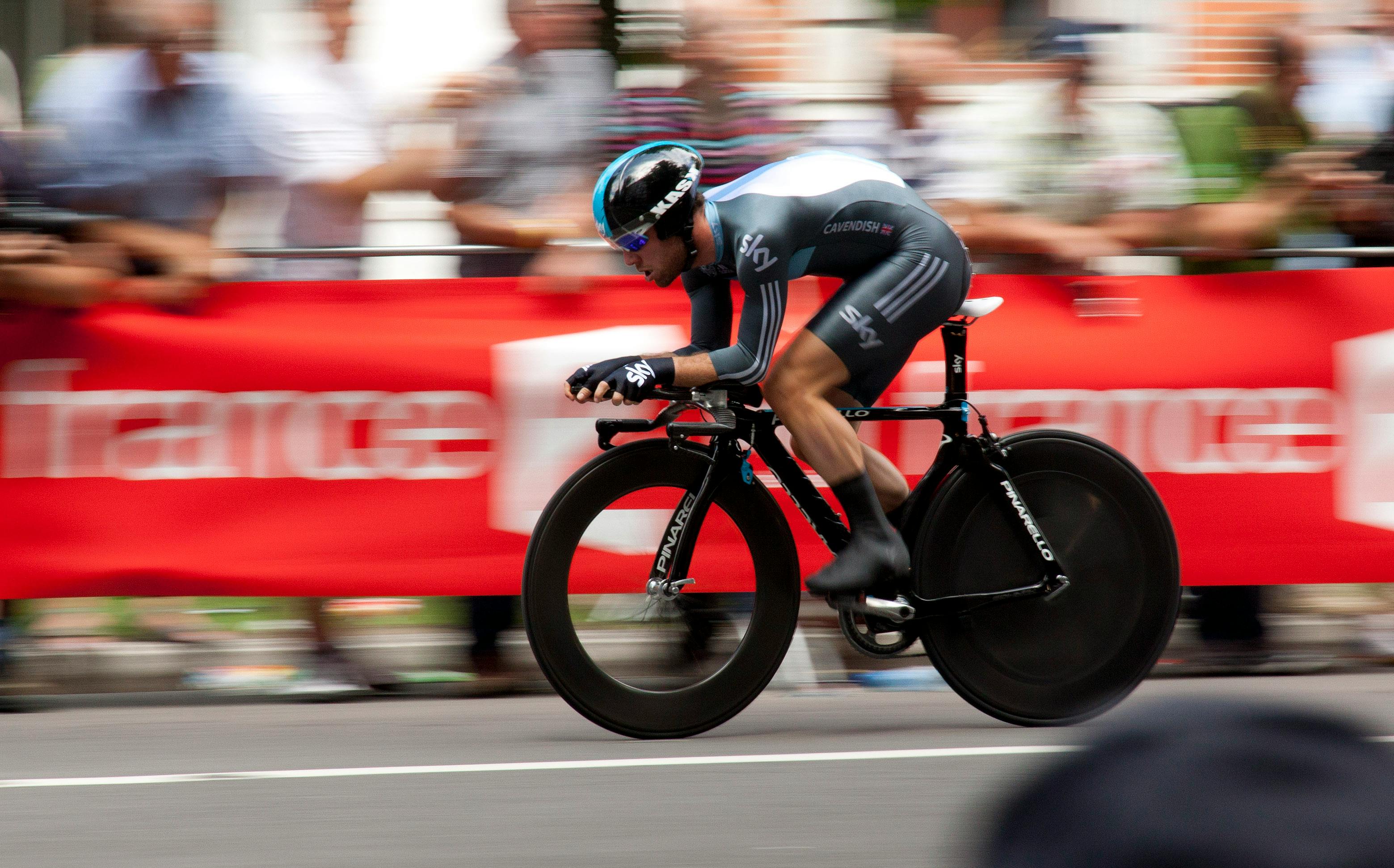
The second lever is aerodynamics. Once you are riding above roughly twenty miles per hour, about eighty percent of your effort goes into pushing air rather than fighting gravity, and small position changes pay back disproportionately. Lowering your handlebars by a couple of centimetres, riding in the drops rather than on the hoods, switching to closer-fitting clothing, and removing unnecessary frame bags can together add more than a mile per hour at the same power. None of those changes cost any extra fitness.
The third lever is bike fit. A proper professional fit, typically a hundred and fifty to three hundred dollars, can improve power output by five to ten percent through better saddle height, a more useful fore-and-aft saddle position, and a reach that lets you breathe and produce force without overextending. The return on that single investment, in both performance and injury prevention, is among the best in the sport.
Lift weights off the bike
Cyclists who add a small amount of strength training reliably get faster, because increased force production means more power per pedal stroke, and stronger connective tissue tolerates higher training loads. The minimal effective dose is genuinely minimal: two thirty-to-forty-five minute sessions per week, focused on a handful of compound movements such as back squats, Romanian deadlifts, single-leg step-ups, and core work. Three sets of six to ten reps on the main lifts is enough for most cyclists. Strength work belongs in the base and build phases of the year, and tapers back during peak race season so it does not interfere with the on-bike work.
A twelve-week plan that works
The four ideas above — base, intervals, efficiency, strength — sit inside a twelve-week structure that produces measurable speed gains for almost any rider who completes it honestly.
In weeks one to four, the focus is aerobic endurance. Volume sits at six to eight hours per week, with roughly ninety percent easy Zone 2 riding and ten percent tempo. A representative week is a rest or thirty-minute spin on Monday, easy hour on Tuesday, easy ninety minutes on Wednesday, easy forty-five minutes on Thursday, rest on Friday, a long ride of two to three hours at an easy pace on Saturday, and an easy hour on Sunday.
In weeks five to eight, intensity enters the picture without volume dropping. Total hours move up to seven to nine per week, and the split becomes roughly eighty percent easy and twenty percent hard intervals. A representative week now looks like rest on Monday, easy hour on Tuesday, five-by-five-minute threshold intervals on Wednesday, an easy forty-five-minute recovery ride on Thursday, easy hour on Friday, long endurance ride of two to three hours on Saturday, and five-by-four-minute VO2 max intervals on Sunday.
In weeks nine to twelve, the goal shifts to sharpening rather than building. Volume comes down to six or seven hours per week and intensity stays high — roughly seventy percent easy and thirty percent hard or race-pace work. A typical peak week becomes rest on Monday, easy forty-five minutes on Tuesday, three-by-ten-minute efforts at your goal race pace on Wednesday, an easy thirty-minute recovery spin on Thursday, rest or thirty easy minutes on Friday, a group ride or race on Saturday, and ninety minutes easy on Sunday.
Week thirteen is for testing. A twenty-minute FTP test, compared honestly against your week-one baseline, usually shows a ten to twenty watt improvement when the plan above has actually been followed.
Eating to support the work
Training breaks the body down; nutrition is what builds it back stronger. On rides under an hour, water is usually enough. From sixty to ninety minutes, thirty to sixty grams of carbohydrates per hour — one or two gels or bars — keeps the effort productive. Beyond ninety minutes, sixty to ninety grams of carbohydrates per hour plus electrolytes becomes the working baseline. The general rule is to eat before you are hungry and drink before you are thirsty, because by the time the sensation arrives you are already behind.
Recovery nutrition matters too. Within roughly thirty minutes of finishing a hard ride, twenty to thirty grams of protein and forty to sixty grams of carbohydrates accelerate glycogen replenishment and muscle repair when the body is most receptive. Across the day, aim for around five to seven grams of carbohydrates per kilogram of bodyweight on training days, one-point-six to two-point-two grams of protein per kilogram, and enough fat to round out your remaining calories. Hydration of at least half your bodyweight in pounds, in ounces of water, sets a sensible daily minimum.
Treat recovery as training
You do not get faster on the bike; you get faster during the hours when you are not on it. Sleep is the single biggest lever, and studies repeatedly show meaningful performance differences between riders who get seven hours a night and riders who get nine. Growth hormone release, muscle repair, and glycogen replenishment all depend on it.
Easy active recovery — thirty to forty-five minutes of very light spinning the day after a hard session — increases blood flow and clears fatigue without adding more. At least one full rest day per week is non-negotiable, two is often better, and during those days the adaptations from the previous week’s training are quietly locked in.
Testing and timeline
Every four to six weeks, repeat the twenty-minute FTP test: fifteen minutes of easy warm-up, a five-minute all-out effort, ten minutes of easy recovery, then twenty minutes at the highest power you can sustain, with FTP taken as ninety-five percent of that final twenty-minute average. A progression from two hundred watts in week one, to two hundred and ten in week six, to two hundred and twenty by week twelve is well within reach for most riders who follow a structured plan.
The timeline tends to play out in roughly the same way for almost everyone. The first two weeks feel like adaptation, with no obvious speed gains. By weeks three and four, the aerobic base starts to show and rides feel less taxing. Between weeks five and eight, noticeable power gains arrive and climbs feel easier. From week nine onward, the speed starts showing up on the road and personal bests start falling. Beyond week thirteen, the work becomes one of maintenance.
If you do only one thing
If you take nothing else from this guide, take polarised training. Stop riding medium-hard every time. Ride easy when it is meant to be easy and hard when it is meant to be hard, and you will unlock speed you almost certainly already had.