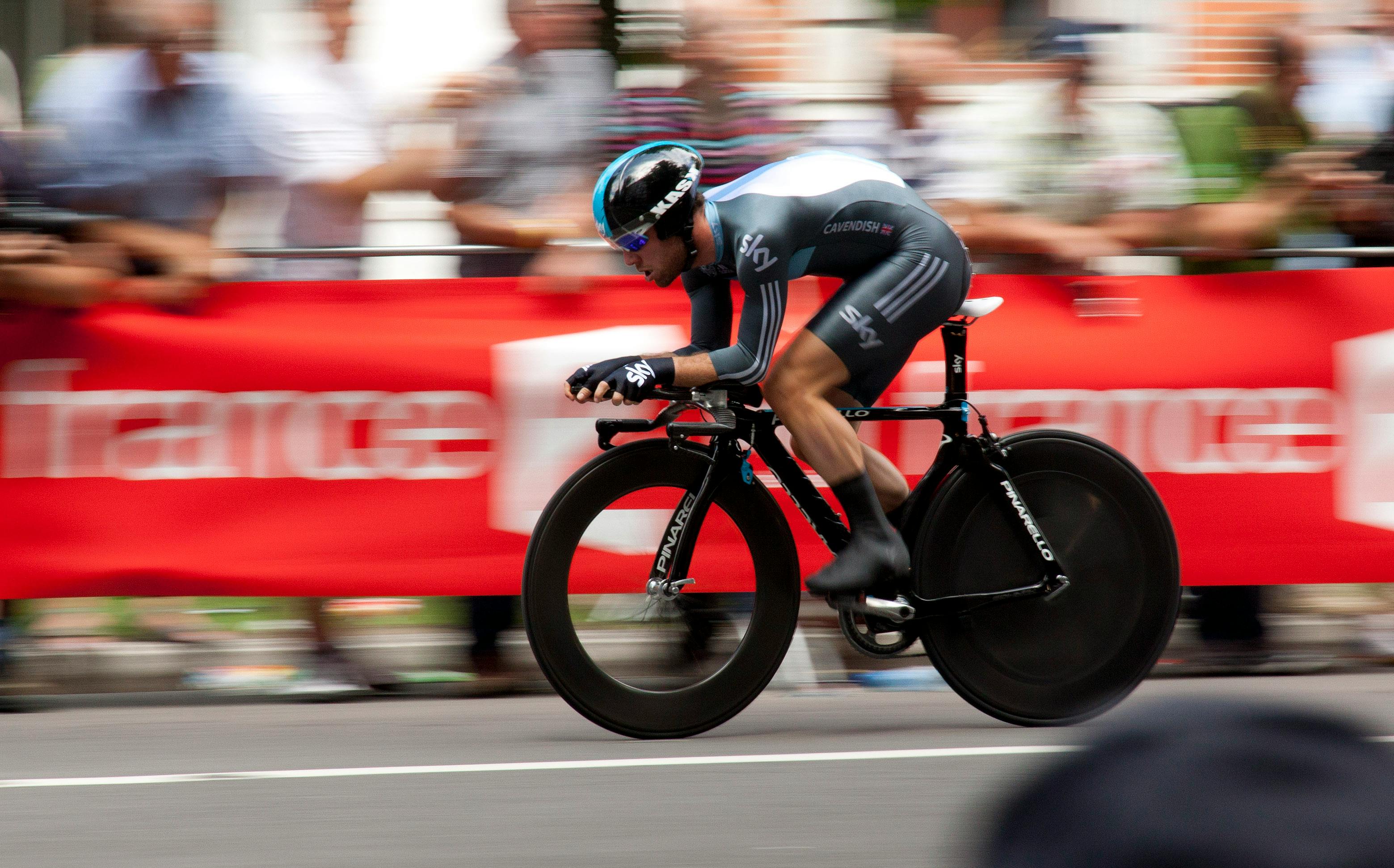
Your legs can do more than your brain allows.
Here are 10 psychology hacks that unlock performance you already have—no extra training required.
Mental Trick 1: The 40% Rule (Navy SEAL Method)
The Concept
When your brain says “I’m done,” you’re only at 40% of your actual capacity.
Origin: Navy SEAL training principle. When recruits think they can’t continue, they’re barely halfway to their real limit.
How To Use It In Cycling
When you want to quit:
- Acknowledge the thought: “My brain thinks I’m done.”
- Remind yourself: “I’m only at 40%. I have 60% left.”
- Commit to 5 more minutes
What happens: You’ll almost always continue. The “quit” signal was premature.
The Science
Your brain’s central governor limits performance to preserve energy and prevent harm. But it’s overly cautious—keeping you far from real failure.
Real-world example: Cyclists routinely sprint hard at the finish line after claiming they had “nothing left.” The reserve was always there.
Mental Trick 2: Dissociation (Ignore The Pain)
The Concept
Distract your mind from discomfort by focusing on external stimuli.
How To Use It
During hard efforts:
- Count objects (cars, trees, road signs)
- Mentally spell words backwards
- Recite song lyrics or poetry
- Focus on sounds (wind, tires, breathing rhythm)
- Play mental math games
Why it works: Your brain can only hold limited information in conscious awareness. Fill it with non-pain stimuli.
When To Use Dissociation
Best for: Long, steady efforts (tempo rides, endurance rides)
Not ideal for: Short, intense intervals (where focus on form matters)
Research Backing
Studies on marathon runners show dissociative strategies reduce perceived exertion by 10-15% compared to focusing on the body.
Mental Trick 3: Association (Embrace The Pain)
The Concept
The opposite of dissociation. Tune INTO your body, analyze the discomfort, and use it as data.
How To Use It
During intervals or races:
- Notice which muscles are working
- Analyze your breathing pattern
- Feel your cadence and power delivery
- Monitor heart rate sensations
- Use pain as feedback, not a threat
Why it works: When you observe discomfort clinically (like a scientist), you remove the emotional reaction to it.
The Mindset Shift
Old thought: “This hurts. I want it to stop.”
New thought: “My quads are burning. That means they’re working. This is productive suffering.”
When To Use Association
Best for: Short, intense efforts where form and pacing matter
Research backing: Elite athletes use association more than amateurs. They see pain as information, not a problem.
Mental Trick 4: Chunking (Shrink The Task)
The Concept
Break overwhelming tasks into micro-goals.
How To Use It In Cycling
Instead of: “I have to ride 50 more miles.”
Think: “I’ll ride to that tree 100 meters ahead.”
Then: Pick the next landmark. Repeat.
Why it works: Your brain can handle 100 meters. It panics at 50 miles.
Chunking Strategies
For climbs:
- Ride to the next switchback
- Count to 100 pedal strokes, then start over
- Break the climb into thirds: “Just get through the first third”
For long rides:
- Ride to the next town
- Focus on the next hour, not the total distance
- Break into quarters: “Only 25% left”
Mental Trick 5: The Alter Ego (Become Someone Else)**
The Concept
Adopt the mindset of a pro cyclist or your cycling hero when efforts get hard.
How To Use It
When suffering:
- Ask: “What would [Pogačar / Van Vleuten / your hero] do right now?”
- Visualize yourself as that rider
- Mimic their style, posture, mentality
Why it works: You’re temporarily borrowing their mental toughness.
Real-World Use
Kobe Bryant famously used the “Black Mamba” alter ego to access ruthless competitiveness.
You can do the same:
- Create a cycling alter ego with the traits you need
- Give it a name
- “Become” that persona when rides get hard
Example
Regular you: Tired, wants to quit Alter ego: “The Diesel”—relentless, unstoppable, thrives on suffering
Mid-ride, you activate “The Diesel.” Suddenly, quitting isn’t an option.
Mental Trick 6: Positive Self-Talk Scripts
The Concept
What you say to yourself determines how you perform.
The Research
A 2014 study found that positive self-talk improved cycling time-trial performance by 18% compared to negative self-talk.
How To Use It
Replace negative scripts:
| Negative Self-Talk | Positive Self-Talk |
|---|---|
| ”I can’t do this." | "I’ve done harder." |
| "This hurts too much." | "Pain is temporary. Quitting lasts forever." |
| "I’m too slow." | "I’m pacing myself perfectly." |
| "Everyone’s faster." | "I’m riding my race." |
| "I should stop." | "I can do 5 more minutes.” |
The Power Phrase Method
Create 3 go-to phrases for when things get hard:
Examples:
- “I am strong.”
- “I’ve got this.”
- “Just keep pedaling.”
Repeat them out loud or internally when your brain says quit.
Mental Trick 7: Future Self Visualization
The Concept
Visualize how proud you’ll feel after finishing—before you finish.
How To Use It
Mid-ride, when struggling:
- Close your eyes briefly (if safe)
- Picture yourself at the finish: tired, proud, accomplished
- Feel the relief and satisfaction
- Now ride toward that feeling
Why it works: Your brain experiences the reward before it happens, creating motivation to continue.
The Post-Ride Regret Prevention
Ask yourself: “Will I regret quitting, or regret finishing?”
The answer is always regret quitting.
Use that knowledge to push through.
Mental Trick 8: The Countdown (Not Count-Up) Method
The Concept
Count down, never count up.
How To Use It
Bad: “I’ve done 3 intervals. I have 5 more to go.” (Focuses on what’s left—overwhelming)
Good: “5 intervals left… 4 intervals left… 3 intervals left…” (Progress feels faster)
Why It Works
Psychologically, counting down creates a sense of completion. Counting up highlights how much work remains.
Apply It To Everything
- Intervals remaining
- Miles remaining
- Minutes remaining
- Hill repeats remaining
Mental Trick 9: The Smile Hack
The Concept
Forcing a smile reduces perceived exertion.
The Research
A 2012 study published in Psychology of Sport and Exercise found that runners who smiled during hard efforts had lower perceived exertion and better performance than those who frowned.
How To Use It
When suffering:
- Force a smile (even if it’s fake)
- Hold it for 10-15 seconds
- Notice the slight mental shift
Why it works:
- Facial feedback hypothesis: Your face influences your brain
- Smiling releases endorphins
- It interrupts the pain-suffering feedback loop
The Paradox
You won’t feel like smiling when it’s hard.
That’s exactly when you should do it.
Mental Trick 10: The “Someone Is Watching” Effect
The Concept
People perform better when they believe they’re being observed.
The Research
The Hawthorne Effect shows that performance improves under observation—even if the observation is imagined.
How To Use It
When alone and struggling:
- Imagine your coach is watching
- Pretend you’re being filmed for a documentary
- Visualize your cycling hero riding beside you, evaluating your effort
Why it works: You ride to impress the imagined observer. Pride and external accountability kick in.
The Strava Factor
Knowing your ride will be uploaded to Strava creates the “someone is watching” effect.
Use it: Ride like someone you respect will see your data.
Bonus Trick: The Mantra Method
The Concept
Repeat a single word or phrase in rhythm with your pedaling.
How To Use It
Pick a mantra:
- “Strong”
- “Keep going”
- “I am enough”
- “Pedal, breathe, repeat”
Sync it to your cadence:
- Left pedal: “Strong”
- Right pedal: “Strong”
Repeat for minutes until it becomes automatic.
Why It Works
Mantras occupy your conscious mind, preventing negative thoughts from taking over.
How To Practice These Mental Tricks
You can’t deploy mental tricks in a race if you’ve never practiced them.
Training Rides As Mental Labs
Easy rides: Practice dissociation (counting, songs, external focus)
Threshold intervals: Practice association (feel the effort, observe the pain)
Hill repeats: Practice chunking and positive self-talk
Long rides: Practice visualization and alter ego activation
The Mental Training Log
After each ride, note:
- Which mental trick did you use?
- Did it work?
- What would you try next time?
Mental skills improve with deliberate practice, just like physical skills.
The Meta-Trick: Awareness
The ultimate mental trick:
Recognize when your brain is lying to you.
Your brain will say:
- “You’re done.”
- “This is too hard.”
- “You should quit.”
But now you know:
- You’re at 40%, not 100%
- Discomfort isn’t danger
- The finish line feeling is worth the suffering
Awareness breaks the automatic “quit” response.
The Proof
Test this:
Next hard ride, when you want to quit, deploy one mental trick.
Notice:
- You keep going
- The suffering becomes manageable
- You finish stronger than you thought possible
That’s not magic. That’s your mind working for you instead of against you.